Best Places to Stargaze

The best places to stargaze in the United States

One hundred and fourteen sites across ten regions, mapped and sorted by how dark the sky actually is. Not a listicle of pretty photos: an estimated darkness class for each one, whether you can actually get in after dark, and what the drive, the road and the weather are going to ask of you.

The short version

  • Darkness is only half of it. A Bortle 2 sky you cannot legally stand under at 1am is worth less than a Bortle 3 with an open gate and a paved parking lot.
  • Certification measures a lighting policy, not a sky. Some of the darkest places in the country hold no designation at all, and a few certified parks are merely good.
  • The dark regions of the US are not evenly matched. The Colorado Plateau and the Desert Southwest have depth at every level. Across all of New England and the mid-Atlantic there are two certified dark sky parks, and across Alaska and Hawaii there are none at all.
  • Moon phase beats destination. A mediocre site on a moonless night outperforms a world-class site three days off full, every single time.
  • Most people do not need to drive as far as they think. A genuinely dark sky is usually 45 to 90 minutes from a mid-sized American city.

Dark sky stargazing is not the same thing as looking up

Worth separating these two, because they get used interchangeably and they are not the same activity.

Ordinary stargazing

Ordinary stargazing is what most of us grew up doing. You step into the backyard, you find the Big Dipper, maybe Orion in winter, and Venus if it happens to be out. It is lovely, and it is how almost everyone starts. Under a typical suburban sky you are stargazing your way through somewhere between fifty and a few hundred visible stars.

sky glow
Bortle 9 · inner cityBortle 1 · true dark
Drag the slider. Looking south on a July night, roughly midnight. The three labeled stars are the Summer Triangle, and they are visible from every sky on this scale, including the worst one. Everything that appears between them is what you drive for. Star counts are approximate figures for a dark-adapted eye on a clear, moonless night.

Dark sky stargazing

Dark sky stargazing is a categorically different experience, and the number is the easiest way to feel the difference: under a truly dark sky you can see somewhere around 4,500 stars with nothing but your eyes. The Milky Way is not a faint smudge you talk yourself into. It has structure, dust lanes, a visible bulge toward Sagittarius, and it casts a faint shadow. Andromeda, a galaxy 2.5 million light years out, is just there, an obvious grey oval, no equipment required.

The gap

That gap is the whole reason this page exists. Roughly 80% of North Americans live under skies too bright to see the Milky Way at all, which means most people have never seen the sky the way every human being before about 1900 saw it as a matter of course. Getting to one of these places is not about better gear. It is about driving somewhere.

Bortle zones, briefly

The Bortle scale runs 1 to 9 and describes how much artificial light is washing out a given sky. It is a nine-point ladder, and each rung is a real, observable difference rather than a marketing tier.

1 · Truly dark4–5 · Suburban9 · Inner city

The practical shorthand: 1 to 2 is what this page is mostly about, and the Milky Way is the brightest thing in the sky. 3 is rural, still excellent, and the point at which most people say out loud that they have never seen anything like it. 4 to 5 is the edge of town, where the Milky Way survives overhead but dies near the horizon. 6 and up is where the sky stops being the point.

Two caveats

This page puts a class on every one of the sites below, so two things are worth saying plainly before you use them.

First, Bortle is a description, not a measurement. The rigorous version is a sky quality meter reading in magnitudes per square arcsecond (mag/arcsec²), and a Bortle class is roughly a bucket of SQM values. The classes on this page are estimates drawn from published light pollution data and the general consensus about each site, not readings I took standing there. Where I have taken a reading myself, it goes in the dispatch for that place.

Second, a class describes a site on a good night, not every night. Humidity, smoke, high cloud and a low moon can each cost you a full class. The Southeast sites in particular measure better than they look, because water vapor scatters what light there is.

What actually makes a place good for stargazing

Almost every guide to the best places to stargaze stops at darkness. Darkness is the headline and it is genuinely the first filter, but it is not what makes or breaks a night. The things below are what I actually check before committing to a site, roughly in the order I check them.

01

Darkness

The first filter, not the last. Get to Bortle 3 or better and every further improvement gets harder to buy and easier to lose to a passing cloud.

02

Night access rules

The single most overlooked item on the list. Plenty of dark places lock the gate at sunset. Kissimmee Prairie closes fifteen minutes after sundown. Cherry Springs charges separately for the astronomy field. Check before you drive, not when you arrive.

03

The horizon

What you can see matters as much as how dark it is. Trees and canyon walls eat the southern sky, which is where the Milky Way core lives. An open playa, a dune field or a ridge beats a darker site hemmed in by terrain.

04

The road in

High clearance, 4WD, gravel that turns to grease after rain. Medano Pass at Great Sand Dunes is 4WD only and the Park Service means it. Getting stuck at midnight in a place with no cell signal is a different kind of night than the one you planned.

05

Where you sleep

Distance to a real bed decides whether you stay out until 2am or bail at 11. Lodging inside the park, as at Death Valley, is worth an entire Bortle class in practice.

06

Safety, honestly assessed

Unfenced canyon rims. Grizzly country. Alligators on the boardwalk. Summer heat that stays lethal after dark. None of these should stop you, and all of them should change how you plan.

07

Cell coverage

Assume none. Download your maps, your sky charts and your forecast before you lose signal, and tell somebody where you are going and when you expect to be back.

08

Climate, not weather

Weather is what happens on your date. Climate is why the Desert Southwest gets 250 clear nights and the Pacific Northwest is a summer-only proposition. Pick the region by climate, then pick the date by weather.

Accessibility, specifically. If you or someone you are bringing has mobility limitations, the field narrows fast and nobody writes about it. The sites that work are the ones where you can see from a paved lot or a short flat path: Headlands in Michigan, Prineville Reservoir in Oregon, the Cosmic Campground pads, most Grand Canyon South Rim viewpoints, and the main pullouts at Bryce and Capitol Reef. Worth asking a ranger directly; they almost always know the answer and are rarely asked.

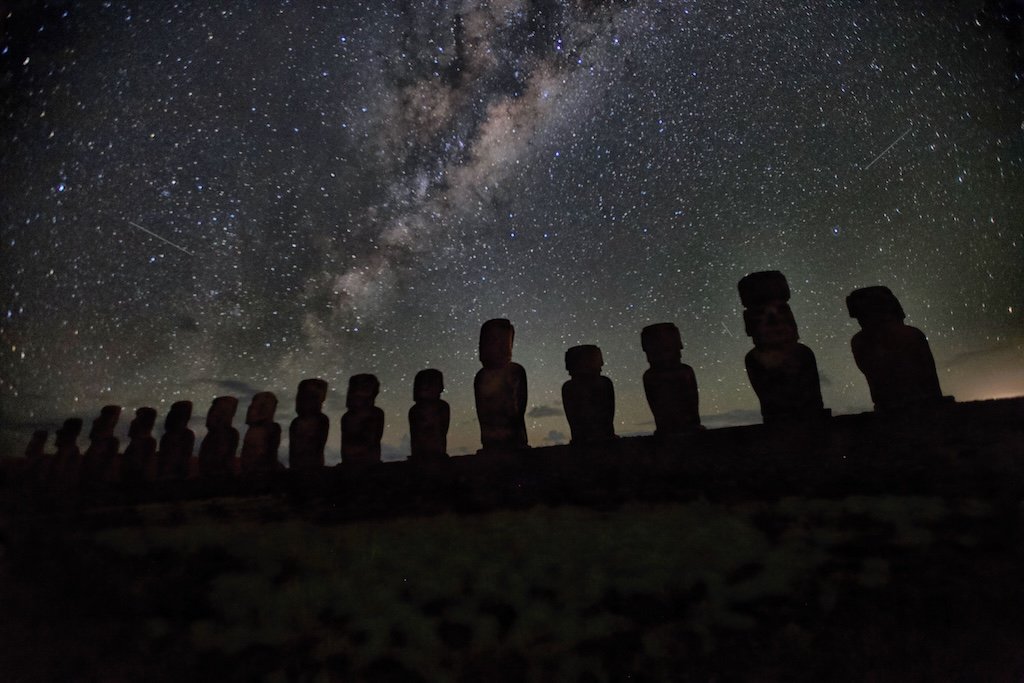
The Milky Way arching over the moai of Rapa Nui

Rapa Nui, Chile · Bortle 1

Find the dark sky nearest you

Everything above is the reason this page is worth reading, and also the reason it is not enough on its own. The best place to stargaze is not the darkest site in America. It is the darkest site you will actually get to, on a night the moon cooperates, with a horizon that shows you the part of the sky you came for.

For most people that place is closer than they expect. I put together a free guide that walks through exactly how to find yours: how to read a light pollution map without being fooled by it, where the popular dark sky maps quietly mislead you, what the Bortle scale means in plain language, how to time a night around moon phase, and the short list of gear that actually matters.

Get the free guide

Where to go, region by region

The best places to stargaze in America are not evenly distributed, and this is what that actually looks like: ten regions, 114 sites, all fifty states in scope. Each region is sorted by how dark the sky actually is rather than by how famous the place is, because those two things come apart more often than you would think.

Almost every number on this page is an estimate, and the ones that are not are marked. Published sky-quality readings barely exist: across all 114 sites here, fewer than half a dozen have a figure anyone has actually published, and the most-quoted number for the most famous dark sky park in the eastern US traces back only to aggregator sites. So where a card carries a gold reading, that is our meter, on that ground, on a stated night, with the dispatch it came from one tap away. Everything else is an estimate drawn from published light pollution data and site consensus, and it says so.

The third tab is the one that needs explaining. Bortle 5 to 6 is not what this site is about, and nobody drives across the country for it. It is on the page because it is where most of us live, and because a suburb that decided to be measurably darker than the one next door has done something worth knowing about. You will not see the Milky Way from those. You will see far more than you can see from your own street, twenty minutes from home, on a Tuesday.

Natural Bridges National MonumentBryce Canyon National ParkCapitol Reef National ParkHovenweep National MonumentArches National ParkDead Horse Point State ParkTorreySpringdaleAntelope Island State ParkEast Canyon State ParkTimpanogos Cave National MonumentSnow Canyon State ParkGreat Basin National ParkCosmic CampgroundChaco Culture National Historical ParkGrand Canyon National ParkOracle State ParkKartchner Caverns State ParkSedonaBisbeeFlagstaffFountain HillsValle de Oro National Wildlife RefugeSaguaro National ParkBig Bend National ParkGreater Big Bend Reserve and McDonald ObservatoryBlack Mesa State Park and Nature PreserveDevils River State Natural AreaEnchanted Rock State Natural AreaSouth Llano River State ParkLost Maples State Natural AreaPalo Duro Canyon State ParkBee CaveDripping SpringsWimberley ValleyHorseshoe BayJamaica Beach, Galveston IslandGreat Sand Dunes National ParkGlacier National ParkCraters of the Moon National MonumentCentral Idaho Dark Sky ReserveBlack Canyon of the Gunnison National ParkWestcliffe and Silver CliffRidgwaySinks Canyon State ParkFriscoJackson and Teton CountyKetchumOregon Outback Dark Sky SanctuarySteens Mountain and the Alvord DesertHart Mountain National Antelope RefugeCottonwood Canyon State ParkPrineville Reservoir State ParkGoldendale Observatory State ParkMethow ValleyAntelopeSunriver Nature Center and Oregon ObservatorySistersDeath Valley National ParkAlabama Hills National Scenic AreaLassen Volcanic National ParkTrona PinnaclesJoshua Tree National ParkAnza-Borrego Desert State ParkBorrego SpringsMount PinosJulianBig Bear LakeIdyllwildMount Diablo State ParkBadlands National ParkVoyageurs National ParkBoundary Waters Canoe Area WildernessMerritt ReservoirHeadlands International Dark Sky ParkNewport State ParkDr. T.K. Lawless County ParkMiddle Fork River Forest PreservePalos PreservesHomer GlenBeverly ShoresHawthorn WoodsCherry Springs State ParkKatahdin Woods and WatersAMC Maine WoodsSusquehannock State ForestAcadia National ParkAdirondack Park and Tupper LakeAllegheny National ForestRicketts Glen State ParkFrench Creek State ParkFrosty Drew Observatory, Ninigret ParkCuster Institute and ObservatoryWatchung ReservationKissimmee Prairie Preserve State ParkStephen C. Foster State ParkBig Cypress National PreserveCape Lookout National SeashoreMammoth Cave National ParkObed Wild and Scenic RiverStaunton River State ParkMayland Earth to Sky Park and Bare Dark Sky ObservatorySky Meadows State ParkRappahannock County ParkGrovelandChattahoochee Bend State ParkMauna KeaHaleakalā National ParkDenali National ParkWrangell–St. Elias National ParkHawaiʻi Volcanoes National ParkKaʻū andamp; South PointChena Hot SpringsHatcher PassNatural Bridges National MonumentNatural Bridges National MonumentBryce Canyon National ParkBryce Canyon National ParkCapitol Reef National ParkCapitol Reef National ParkHovenweep National MonumentHovenweep National MonumentArches National ParkArches National ParkDead Horse Point State ParkDead Horse Point State ParkTorreyTorreySpringdaleSpringdaleAntelope Island State ParkAntelope Island State ParkEast Canyon State ParkEast Canyon State ParkTimpanogos Cave National MonumentTimpanogos Cave National MonumentSnow Canyon State ParkSnow Canyon State ParkGreat Basin National ParkGreat Basin National ParkCosmic CampgroundCosmic CampgroundChaco Culture National Historical ParkChaco Culture National Historical ParkGrand Canyon National ParkGrand Canyon National ParkOracle State ParkOracle State ParkKartchner Caverns State ParkKartchner Caverns State ParkSedonaSedonaBisbeeBisbeeFlagstaffFlagstaffFountain HillsFountain HillsValle de Oro National Wildlife RefugeValle de Oro National Wildlife RefugeSaguaro National ParkSaguaro National ParkBig Bend National ParkBig Bend National ParkGreater Big Bend Reserve & McDonald ObservatoryGreater Big Bend Reserve & McDonald ObservatoryBlack Mesa State Park & Nature PreserveBlack Mesa State Park & Nature PreserveDevils River State Natural AreaDevils River State Natural AreaEnchanted Rock State Natural AreaEnchanted Rock State Natural AreaSouth Llano River State ParkSouth Llano River State ParkLost Maples State Natural AreaLost Maples State Natural AreaPalo Duro Canyon State ParkPalo Duro Canyon State ParkBee CaveBee CaveDripping SpringsDripping SpringsWimberley ValleyWimberley ValleyHorseshoe BayHorseshoe BayJamaica Beach, Galveston IslandJamaica Beach, Galveston IslandGreat Sand Dunes National ParkGreat Sand Dunes National ParkGlacier National ParkGlacier National ParkCraters of the Moon National MonumentCraters of the Moon National MonumentCentral Idaho Dark Sky ReserveCentral Idaho Dark Sky ReserveBlack Canyon of the Gunnison National ParkBlack Canyon of the Gunnison National ParkWestcliffe & Silver CliffWestcliffe & Silver CliffRidgwayRidgwaySinks Canyon State ParkSinks Canyon State ParkFriscoFriscoJackson & Teton CountyJackson & Teton CountyKetchumKetchumOregon Outback Dark Sky SanctuaryOregon Outback Dark Sky SanctuarySteens Mountain & the Alvord DesertSteens Mountain & the Alvord DesertHart Mountain National Antelope RefugeHart Mountain National Antelope RefugeCottonwood Canyon State ParkCottonwood Canyon State ParkPrineville Reservoir State ParkPrineville Reservoir State ParkGoldendale Observatory State ParkGoldendale Observatory State ParkMethow ValleyMethow ValleyAntelopeAntelopeSunriver Nature Center & Oregon ObservatorySunriver Nature Center & Oregon ObservatorySistersSistersDeath Valley National ParkDeath Valley National ParkAlabama Hills National Scenic AreaAlabama Hills National Scenic AreaLassen Volcanic National ParkLassen Volcanic National ParkTrona PinnaclesTrona PinnaclesJoshua Tree National ParkJoshua Tree National ParkAnza-Borrego Desert State ParkAnza-Borrego Desert State ParkBorrego SpringsBorrego SpringsMount PinosMount PinosJulianJulianBig Bear LakeBig Bear LakeIdyllwildIdyllwildMount Diablo State ParkMount Diablo State ParkBadlands National ParkBadlands National ParkVoyageurs National ParkVoyageurs National ParkBoundary Waters Canoe Area WildernessBoundary Waters Canoe Area WildernessMerritt ReservoirMerritt ReservoirHeadlands International Dark Sky ParkHeadlands International Dark Sky ParkNewport State ParkNewport State ParkDr. T.K. Lawless County ParkDr. T.K. Lawless County ParkMiddle Fork River Forest PreserveMiddle Fork River Forest PreservePalos PreservesPalos PreservesHomer GlenHomer GlenBeverly ShoresBeverly ShoresHawthorn WoodsHawthorn WoodsCherry Springs State ParkCherry Springs State ParkKatahdin Woods and WatersKatahdin Woods and WatersAMC Maine WoodsAMC Maine WoodsSusquehannock State ForestSusquehannock State ForestAcadia National ParkAcadia National ParkAdirondack Park & Tupper LakeAdirondack Park & Tupper LakeAllegheny National ForestAllegheny National ForestRicketts Glen State ParkRicketts Glen State ParkFrench Creek State ParkFrench Creek State ParkFrosty Drew Observatory, Ninigret ParkFrosty Drew Observatory, Ninigret ParkCuster Institute & ObservatoryCuster Institute & ObservatoryWatchung ReservationWatchung ReservationKissimmee Prairie Preserve State ParkKissimmee Prairie Preserve State ParkStephen C. Foster State ParkStephen C. Foster State ParkBig Cypress National PreserveBig Cypress National PreserveCape Lookout National SeashoreCape Lookout National SeashoreMammoth Cave National ParkMammoth Cave National ParkObed Wild and Scenic RiverObed Wild and Scenic RiverStaunton River State ParkStaunton River State ParkMayland Earth to Sky Park & Bare Dark Sky ObservatoryMayland Earth to Sky Park & Bare Dark Sky ObservatorySky Meadows State ParkSky Meadows State ParkRappahannock County ParkRappahannock County ParkGrovelandGrovelandChattahoochee Bend State ParkChattahoochee Bend State ParkMauna KeaMauna KeaHaleakalā National ParkHaleakalā National ParkDenali National ParkDenali National ParkWrangell–St. Elias National ParkWrangell–St. Elias National ParkHawaiʻi Volcanoes National ParkHawaiʻi Volcanoes National ParkKaʻū & South PointKaʻū & South PointChena Hot SpringsChena Hot SpringsHatcher PassHatcher Pass
Show

Hover a point to name it or a region below to isolate it, then tap to jump to the detail. Filter by darkness class to thin out a crowded corner.

Utah & the Colorado Plateau

12 sites

The densest run of protected dark sky anywhere in the country, and the only region where the whole ladder is short: you can stand under a Bortle 2 in the morning and sleep 40 minutes from Salt Lake City that night. Utah has certified more dark sky places than any other state on Earth.

Natural Bridges National Monument

Utah
Est. Bortle 2Dark Sky Park · 2007

Where the whole idea started. In 2007 this became the first certified dark sky park anywhere on Earth, and the view through Owachomo Bridge is still why people drive out. Roads and trails stay open all night, no gate. Blanding is 40 miles (65 km) away and cell service quits long before you arrive.

Bryce Canyon National Park

Utah

We have stood on this rim

Bortle 2 · confirmedRead the dispatchDark Sky Park · 2019

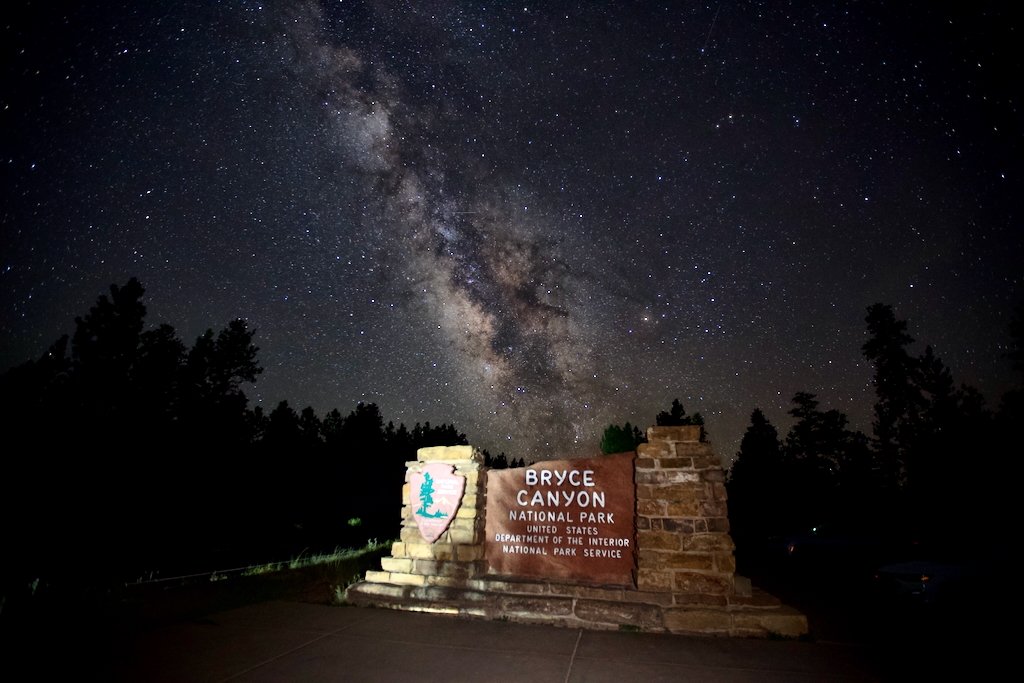
Bryce sits above 8,000 feet (2,400 m), which buys thinner air and steadier seeing than almost anywhere this accessible. I have stood on that rim and it earns the Class 2. Rangers run astronomy programs all summer and the crowds thin fast after dark. Bring more layers than you think; it can touch freezing in June.

Capitol Reef National Park

Utah
Est. Bortle 2Dark Sky Park · 2015

The quietest of Utah's five, and the one where you can still have a pullout to yourself on a Saturday in October. Torrey is 11 miles (18 km) out with real beds and food. Stay on pavement after dark: the backcountry roads want high clearance and the washes flash flood.

Hovenweep National Monument

Utah / Colorado
Est. Bortle 2Dark Sky Park · 2014

Ancestral Puebloan towers built partly to track the sky, under a sky still dark enough to do it. One real catch that trips people up: the trails are officially sunrise to sunset, so night viewing means the campground. Nearest towns are 40 to 45 miles (65 to 72 km) in several directions.

The Desert Southwest

12 sites

Dry air, high ground and very little between you and the horizon. The clear-night count is the best in the country. It is also where this whole movement started, in a mountain town that wrote a lighting ordinance in 1958 and has been at it ever since.

Great Basin National Park

Nevada
Est. Bortle 1–2Dark Sky Park · 2016

About as far from a city as the lower 48 gets, on the flank of a 13,000-foot (3,980 m) peak. Baker is 5 miles (8 km) out with a handful of rooms; Ely is 65 miles (105 km) for options. Wheeler Peak Scenic Drive closes with the snow.

Cosmic Campground

New Mexico
Est. Bortle 2Dark Sky Sanctuary · 2016

Purpose-built for exactly this, and the only Dark Sky Sanctuary in the continental US. Four concrete telescope pads, a full 360° horizon, no fee, no reservation. Also no water, no power, no signal. Glenwood is 9 miles (14 km) out and the forest road gets greasy when it rains.

Chaco Culture National Historical Park

New Mexico
Est. Bortle 2Dark Sky Park · 2013

A thousand-year-old astronomical site that is still one of the darkest places in New Mexico. The access road is washboard dirt and turns impassable when wet, which is the single biggest reason trips here fail. Nearest lodging is 61 to 74 miles (98 to 119 km) out. Bring water and a full tank.

Grand Canyon National Park

Arizona
Est. Bortle 2–3Dark Sky Park · 2019

Hard to beat for a first time, because what you drove to see is spectacular before the sun is even down. South Rim is open all night, year round, no permit. North Rim is darker and closed mid-October to mid-May. The one real hazard is the obvious one: the rim is unfenced.

Texas & the Southern Plains

13 sites

West Texas holds the darkest measured skies in the lower 48. The other half of the Texas story is the Hill Country, where seven towns around Austin and San Antonio have certified themselves in the last decade, more than any other state has managed.

Big Bend National Park

Texas
Est. Bortle 1–2Dark Sky Park · 2012

The National Park Service says outright that Big Bend has the least light pollution of any park unit in the lower 48, and standing in the Chisos at 2am you believe it. Open all night, no curfew. Terlingua is 20 miles (32 km) out. Summer heat is dangerous and there is no cell service.

Greater Big Bend Reserve & McDonald Observatory

Texas

We measured here · July 2026

Bortle 2 · measured21.59 mag/arcsec²Dark Sky Reserve · 2022

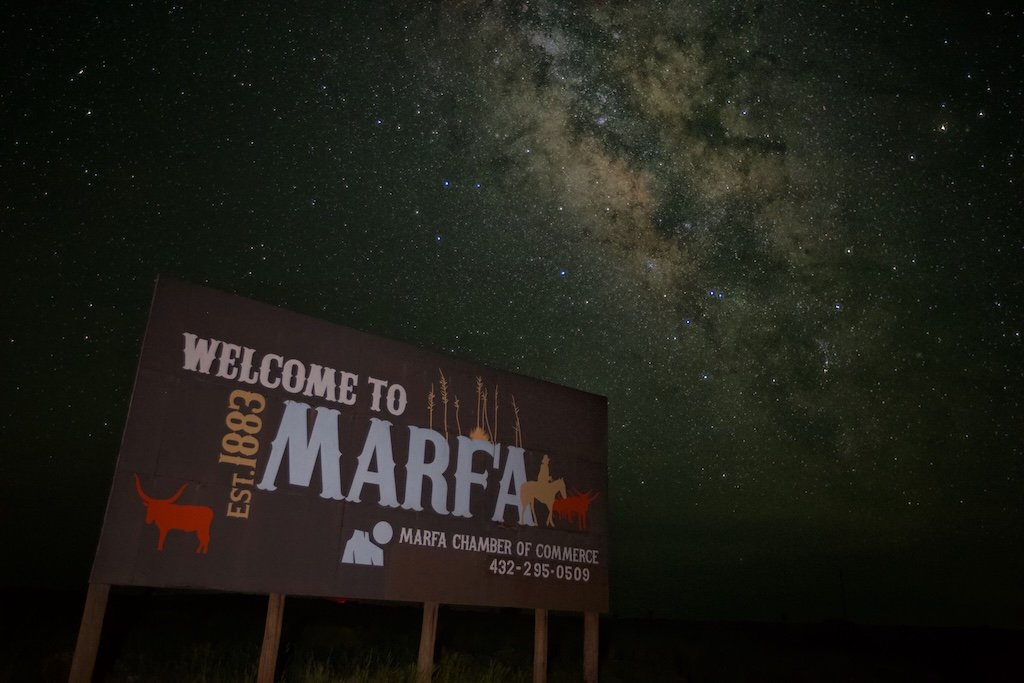
Over nine million acres (38,000+ km²) of coordinated lighting policy across two countries, anchored by one of the great research observatories. My own darkest reading anywhere in the reserve was 21.59 mag/arcsec², ten minutes outside Marfa. Public star parties need a ticket booked ahead. Fort Davis is adjacent; Marfa and Alpine are 25 to 35 miles (40 to 56 km).

Black Mesa State Park & Nature Preserve

Oklahoma
Est. Bortle 1Dark Sky Park · 2025

Oklahoma's first certified dark sky park, and it arrived in 2025 with a Bortle 1 claim attached. The far northwest corner of the panhandle is emptier than most people can picture. Kenton is adjacent and tiny; Boise City is 30-plus miles (48+ km). Very remote, rattlesnakes, no services.

Devils River State Natural Area

Texas
Est. Bortle 2Dark Sky Sanctuary · 2019

Texas's first Dark Sky Sanctuary and one of the hardest places on this page to get into, which is the point. Reservations are mandatory and the gate only opens Friday through Sunday. There is no casual visit here. If you plan far enough ahead, almost nobody else will be there.

The Rocky Mountains

11 sites

Altitude thins the air and takes a real bite out of the haze. The trade is weather, which is why any serious plan up here carries a second night. It is also the one region where the close-to-home tier genuinely runs short, and padding it would be dishonest.

Great Sand Dunes National Park

Colorado
Est. Bortle 2Dark Sky Park · Gold Tier · 2019

Walking onto the dunefield after dark is one of the strangest and best night experiences in the country: no trees, no rocks, no reference points, just sand and sky. Open 24 hours. Alamosa is 35 miles (56 km). Medano Pass Primitive Road is 4WD high-clearance only and the Park Service means it.

Glacier National Park

Montana
Est. Bortle 2Dark Sky Park · 2017

Certified jointly with Waterton Lakes across the Canadian border as one transboundary park, which is the right way to think about a sky. Going-to-the-Sun Road is the vantage worth having and it is closed by snow from mid-October into June. Grizzlies are not theoretical here.

Craters of the Moon National Monument

Idaho
Est. Bortle 2Dark Sky Park · 2017

A lava field under a very dark sky, which is about as close to another planet as Idaho gets. The loop road closes in late November and reopens with the thaw. Arco is right there for a bed. The hazard is underfoot: the lava is sharp enough to open a knee.

Central Idaho Dark Sky Reserve

Idaho
Est. Bortle 2Dark Sky Reserve · 2017

The first reserve certified in the United States, 1,416 square miles (3,668 km²) of Sawtooth country with Stanley in the middle of it. Stanley is small and genuinely remote; Ketchum has more beds an hour away. Most forest roads sit under snow November into May, and this is bear country.

The Pacific Northwest

10 sites

Home to the largest dark sky sanctuary certified anywhere. Summer is the season and it is not close; winter belongs to the clouds. Worth stating plainly: Washington state currently holds no DarkSky certification at all, which is why this region's brighter tier is the thinnest on the page.

Oregon Outback Dark Sky Sanctuary

Oregon
Est. Bortle 1–2Dark Sky Sanctuary · 2024

Two and a half million acres of Lake County, the largest sanctuary certified anywhere to date, with a planned phase two that would more than quadruple it. Mostly open BLM land with no gates. Lakeview has the beds. The roads are dirt and turn to soup after rain.

Steens Mountain & the Alvord Desert

Oregon
Est. Bortle 1–2No certification

No designation of any kind. It is simply one of the emptiest places in the American West, a dry lakebed under a 9,700-foot (2,960 m) fault block. High clearance strongly advised, the playa turns to impassable mud when wet, Fields is tiny and Burns is two hours. No cell service at all.

Hart Mountain National Antelope Refuge

Oregon
Est. Bortle 1–2Inside the Oregon Outback Sanctuary

Sits inside the Oregon Outback Sanctuary, so it carries that certification without most people realising it. Antelope, hot springs, and a sky with nothing in it. Interior roads want high clearance, backcountry camping needs a permit, Plush is 25 miles (40 km) and Lakeview is 65 miles (105 km).

Cottonwood Canyon State Park

Oregon
Est. Bortle 2–3Dark Sky Park · 2024

Oregon's third certified park, and new enough in December 2024 that most guides have not caught up. Paved in, with cabins and camping. Two things to know: there is zero cell coverage anywhere in the park, and the summer heat down in the canyon is serious. Wasco is 15 miles (24 km).

California & the Sierra

12 sites

Two of the darkest national parks in the country sit within a few hours of twenty million people. This is also the region with the most excellent uncertified sites, which says something about how the desert works and how certification works.

Death Valley National Park

California
Est. Bortle 1–2Dark Sky Park · Gold Tier · 2013

The largest dark sky park in the country and one of the few rated Gold Tier. Open all night, with lodging inside the park at Furnace Creek and Stovepipe Wells, which matters more than people expect when the alternative is an hour of unlit two-lane. Summer heat lingers well past midnight.

Alabama Hills National Scenic Area

California
Est. Bortle 2No certification

Uncertified BLM land under the east face of the Sierra, and widely cited as a Bortle 2. Open all night, no gate, no fee, dispersed camping allowed, and Lone Pine is 3 miles (5 km) away. The catch is other people: it is popular enough that headlights and light trespass are a genuine nuisance.

Lassen Volcanic National Park

California

We measured here · August 2026

Bortle 2 · measured21.45 mag/arcsec²No certification

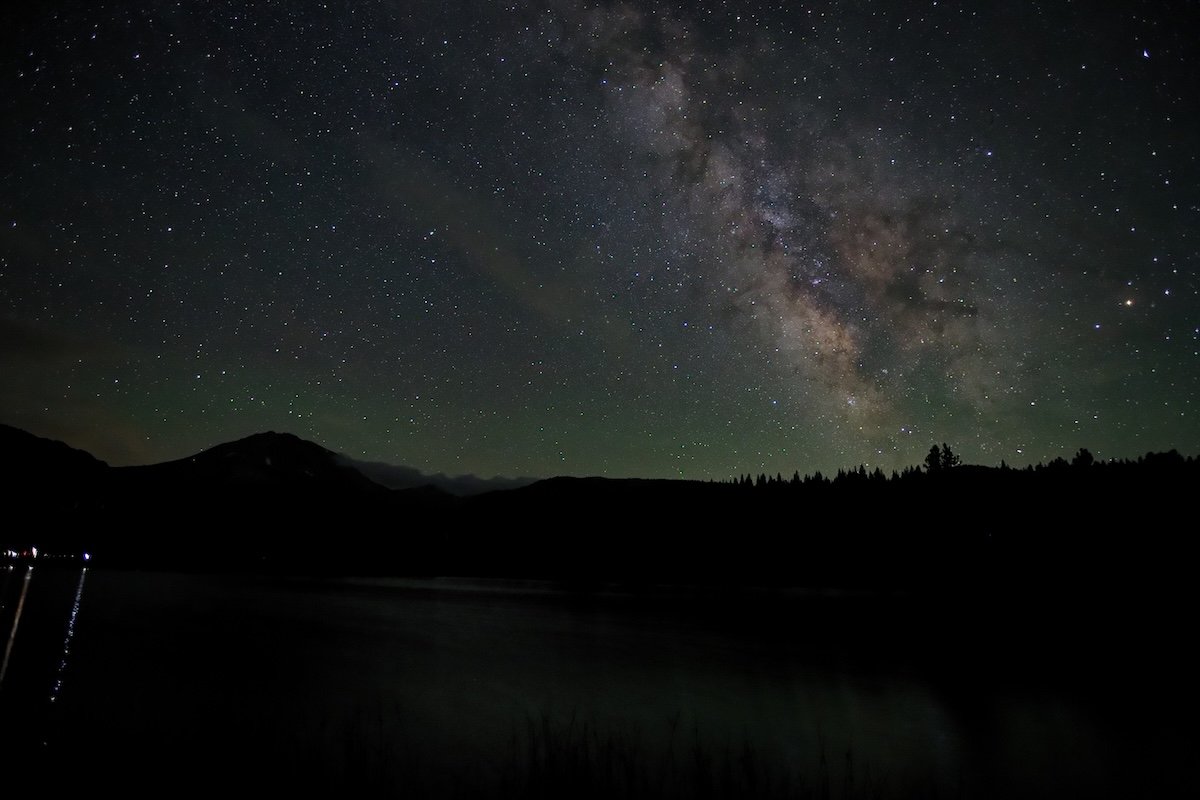
No designation, no plaque, and a sky that outperforms plenty of parks that have one. Worth saying out loud, because certification measures a lighting policy rather than a sky. The main road closes under snow from roughly November into June, so treat this as a July-to-September plan.

Trona Pinnacles

California
Est. Bortle 2–3No certification

Five hundred tufa spires in a dry lakebed, uncertified and unstaffed, reached by five miles (8 km) of dirt road that can wash out after rain. Open 24 hours, dispersed camping, no water and no services. Ridgecrest is 20 miles (32 km). Bring everything, including a way to change a tire.

The Plains & Upper Midwest

12 sites

Flat, empty and a long way from anything, and in the northern tier aurora is a live possibility rather than a fantasy. If that is the trip you actually want, start with northern lights trip planning instead. Chicago, meanwhile, has quietly built the densest cluster of certified suburbs in the country.

Badlands National Park

South Dakota
Est. Bortle 2Dark Sky Park · 2026

Certified in July 2026, so most of what you will read online has not caught up yet. The loop road is open all night and the formations hold starlight in a way that photographs beautifully. Wall is 8 miles (13 km) out. Rattlesnakes and bison are both real after dark.

Voyageurs National Park

Minnesota
Est. Bortle 2Dark Sky Park · 2020

The planning quirk that defines it: most of the park is water, and most of the good sky is boat access only. That is a feature, and the reason to book an outfitter rather than wing it. International Falls is 12 miles (19 km). Cold water rather than heat is the hazard.

Boundary Waters Canoe Area Wilderness

Minnesota
Est. Bortle 1–2Dark Sky Sanctuary · 2020

A million acres of canoe wilderness that was the largest dark sky sanctuary on Earth until Oregon passed it in 2024. Getting in means a quota permit and a paddle, not a parking space. Ely and Grand Marais are the outfitter towns. No cell coverage across most of the interior, and aurora is a live possibility.

Merritt Reservoir

Nebraska
Est. Bortle 1–2Dark Sky Park · 2022

DarkSky International's 200th certified place and home of the Nebraska Star Party, whose own field readings run 21.5 to 22.0 mag/arcsec². That is about as good as it gets in the lower 48. Valentine is 30 miles (48 km) out. Sandhills roads are paved or well-graded gravel and fine in the dry.

The Northeast

12 sites

Harder country for this than anywhere else, which is exactly what makes the pockets that survive worth the drive. Almost nothing here is certified: across Pennsylvania, New York, New Jersey and all six New England states there are two certified parks. Most of what people actually use holds no designation at all.

Cherry Springs State Park

Pennsylvania
Est. Bortle 2Dark Sky Park · 2008

The best sky within a day's drive of the eastern seaboard, and close to the only Bortle 2 between Chicago and the Atlantic. The Astronomy Field is a separate reservation and fee from the campground, so read the booking page properly. Coudersport is 10 miles (16 km). The road in is thick with deer.

Katahdin Woods and Waters

Maine
Est. Bortle 2Dark Sky Sanctuary · 2020

A sanctuary east of the Mississippi is nearly a contradiction in terms, and this is the one that exists. No services inside, interior roads unpaved and rough, essentially no cell coverage. Millinocket is about half an hour out. Go with a full tank and somebody who knows when to expect you back.

AMC Maine Woods

Maine
Est. Bortle 2Dark Sky Park · 2021

New England's only certified dark sky park, run by the Appalachian Mountain Club, who describe the sky as the most pristine east of the Great Plains. Not a same-day trip from anywhere: remote, unpaved, no cell service. AMC runs lodges on the property, which is the sane way to do it.

Susquehannock State Forest

Pennsylvania
Est. Bortle 2–3No certification

The 262,000 acres of uncertified backcountry wrapped around Cherry Springs. No gate, no fee, no field to book, dispersed camping with a free permit. This is where you go when the Astronomy Field is full, which on a clear new-moon Saturday it will be. Forest roads want high clearance and there is no cell service.

The Southeast

12 sites

Humidity costs you transparency, and the good sites here measure better than they look. Virginia in particular has quietly certified a run of state parks, including the two closest usable dark skies to Washington DC.

Kissimmee Prairie Preserve State Park

Florida
Est. Bortle 2Dark Sky Park · 2016

A Bortle 2 in Florida is genuinely surprising, and this is it. The catch is access: the gate closes 15 minutes after sunset and only campers and pass holders get in after that, so this is a book-ahead trip. The astronomy pad sites have red-light-only rules. Okeechobee is 25 miles (40 km).

Stephen C. Foster State Park

Georgia
Est. Bortle 2Dark Sky Park · Gold Tier · 2016

Deep in the Okefenokee, Georgia's first dark sky park and a Gold Tier one. One road in, and park hours apply unless you are camping. Fargo is 18 miles (29 km) with very little in it. Alligators and venomous snakes are an actual planning consideration after dark. Stay on the boardwalks.

Big Cypress National Preserve

Florida
Est. Bortle 2–3Dark Sky Park · 2016

The first national preserve in the country to certify, and stargazing is explicitly permitted sunset to sunrise with no permit. Pull-offs along US-41 do the job. Naples is 40 miles (64 km). The Park Service warns plainly about limited cell coverage, and the alligators and snakes are not a figure of speech.

Cape Lookout National Seashore

North Carolina
Est. Bortle 2–3Dark Sky Park · 2021

The first Atlantic coastal park in the NPS system to certify, with a measured zenith brightness of 21.4 mag/arcsec², one of the few real published readings on this page. Ferry access only, 4WD on the islands, primitive camping, no potable water and no cell service. Plan it properly or not at all.

Alaska & Hawaii

8 sites

The two states everybody forgets, and between them they hold the darkest sky in the country and the only one you have to plan a season around. Neither has a single certified dark sky place, which says more about who files paperwork than about the skies. Alaska's constraint is the one nobody expects: from late April to late August it never gets properly dark at all.

Mauna Kea

Hawaii

We have stood on this summit

Bortle 1 · confirmedRead the dispatchNot certified

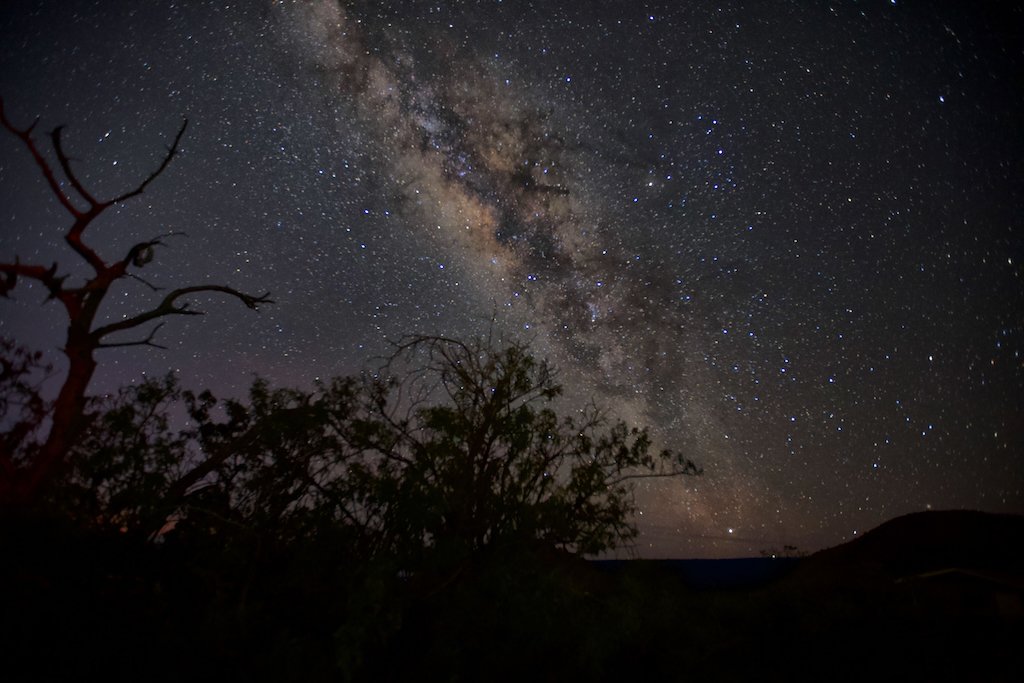
One of the great observatory sites on Earth, and not certified by anyone, which tells you how little certification has to do with darkness. Published zenith brightness from the observatories runs around 21.1 mag/arcsec² in V. The public is asked off the summit within 15 to 20 minutes of sunset, and 4WD is required above the visitor station at 9,200 feet (2,800 m). Altitude sickness is the real hazard.

Haleakalā National Park

Hawaii
Est. Bortle 2Not certified

Ten thousand feet (3,055 m) of volcano above the Pacific, and the summit district is open around the clock. The reservation system people worry about applies only to sunrise, 3am to 7am, so a night visit needs nothing booked. It is genuinely cold up there, which surprises people who packed for Maui.

Denali National Park

Alaska
Est. Bortle 1–2Not certified

Not certified, whatever some travel sites claim. The catch is access: private vehicles stop at Mile 15 and the shuttle buses do not run at night, so the dark interior means a campground or backcountry permit rather than a drive-in. And there is no astronomical darkness at all from late April to late August. This is an autumn and winter trip.

Wrangell–St. Elias National Park

Alaska
Est. Bortle 1–2Not certified

The largest national park in the country and one of the emptiest places under the American sky. Also not certified, despite what you may read. Reaching McCarthy means 60 miles (97 km) of the McCarthy Road, gravel and washboarded, and the Park Service genuinely recommends a full-size spare. Winter access is snowmachine or ski.

On certification. An International Dark Sky Park, Reserve, Sanctuary, Community or Urban Night Sky Place designation from DarkSky International is awarded for a lighting management plan and a community commitment, not for a measured darkness figure. It is a strong signal that a place is protecting its sky and it is worth supporting. It is not a ranking, and it is not a darkness score. Some of the darkest sites on this page hold nothing at all, and some certified places sit under a Bortle 6.

One night, planned properly

That is a hundred and fourteen places, and picking one off a list is the easy half. The part that decides whether you drive home changed or disappointed is the night itself: moon phase, twilight timing, whether the galactic core is even up, a horizon that shows you the right part of the sky, and a second night held in reserve for when the first one clouds over. The rest of this page is about that.

Or you can hand it to somebody who has spent ten years standing in these places with a meter. I build custom plans for one specific night at one specific site, starting at $150.

See how a stargazing trip plan works

Then there is your particular night

You can pick the right place and still drive home having seen nothing. The site is the constant. These are the variables, and they are the reason a stargazing plan beats a stargazing destination.

The night planner

Set a latitude and a date. The slider runs from tonight through the next twelve months, and everything below is computed for the night you land on. Times are given as how long after sunset, not as clock times, so no time zone or daylight saving can mislead you.

Dates run from today, read from your own device, so the moon is always the real moon rather than a snapshot of whenever this page was written. Positions come from standard low-precision solar and lunar formulas, good to a few minutes, which is far finer than any of these decisions need. Moonrise and moonset are approximated from lunar age. Check an ephemeris before you commit to a long drive.

Twilight

Twilight has stages, and only one of them counts. Civil twilight is the pretty part, when the sky still holds color. Nautical twilight is when the bright stars come out and most people think it is dark. Astronomical twilight is the last of it, and true darkness does not start until the sun is 18° below the horizon. Depending on your latitude and the season, that can be 90 minutes after sunset. Show up at nautical twilight and you will pack up before the sky ever finishes arriving. Above roughly 48° north in June, astronomical twilight never happens at all.

HORIZONSUNSETCIVIL−6°NAUTICAL−12°ASTRONOMICAL−18°THE SKY AT THAT SUN ANGLE−6°−12°−18°TRUE DARK BEGINS HERE
True darkness is a sun angle, not a time of evening. The sky at each stage is shown above the geometry that produces it.

Moon phase

The moon is the biggest single variable and the easiest to control. A full moon at a Bortle 1 site gives you roughly a Bortle 5 sky. This is the mistake people make most often, and the fix is free: plan around new moon, or use the window after moonset or before moonrise on a crescent night. A last quarter moon means the whole first half of the night is dark.

100%New78%Waxing crescent50%First quarter22%Waxing gibbousnoneFull22%Waning gibbous50%Last quarter78%Waning crescentDUSKDAWN →PLAN HEREDO NOT BOTHERALSO FINE
The share of the night with no moon in the sky, phase by phase. A waxing moon frees the late night; a waning moon frees the early one.

Milky Way season

The Milky Way core has a season and a clock. In the northern hemisphere the bright galactic center is above the horizon from roughly late March through early October, and it climbs higher and arrives earlier as summer goes on. In February it is a pre-dawn object. In August it is up as soon as the sky is dark. Outside that window you can still see the Milky Way, but you are looking at the fainter outer arm, not the part that stops conversations.

3H6H9H12HJan1.7h15°Feb+8H3.0h22°Mar+6H4.2h25°Apr+4H5.5h25°May+1H5.8h25°JunDARK5.5h25°JulDARK4.1h25°AugDARK2.9h22°SepDARK1.7h15°OctDARKNovDecSTARTSCORE UP, SKY DARKALL THE DARKNESS THAT NIGHT36°N
Read the solid bar: that is how many hours the core is actually above the horizon while the sky is properly dark. The faint bar behind it is the whole night’s darkness, so you can see how much of it the core is present for. In June the two are the same height — the core is up for every dark minute there is, but the night itself is only five hours long. August trades a little of that for a long night with the core already up the moment it goes dark. The figure inside each bar is how high the core gets. Starts is how long after true dark the core clears the horizon; dark means it is already up. Computed for 36°N.

Transparency and seeing

Transparency and seeing are different things. Transparency is how much haze, dust and moisture sits between you and space, and it decides whether faint things are visible at all. Seeing is atmospheric turbulence, and it decides whether a planet at high magnification looks sharp or looks like it is underwater. A night can be superb for one and poor for the other. High desert sites at altitude tend to get both.

TRANSPARENCY · HOW MUCH GETS THROUGHCLEARHAZYFaint things vanish. The bright ones barely notice.SEEING · HOW STEADY IT ISSTEADYTURBULENTDetail smears. Brightness is unchanged.
Two different problems. One night can be excellent for one and poor for the other, which is why a forecast that gives you a single score is not much use.

Terrain

Terrain shapes the sky you actually get. A ridge to your south costs you the galactic core. A valley can trap cold air and fog. A dune field or a dry lakebed gives you a horizon-to-horizon dome, which is a genuinely different feeling from a good sky seen through a keyhole.

136° of open skyRIDGE TO THE SOUTH
The core sits low in the south. A ridge there takes exactly the part you came for.
101° of open skyVALLEY
Cold air pools, fog forms, and the sky narrows to a slot overhead.
175° of open skyPLAYA OR DUNE FIELD
Horizon to horizon in every direction. A different feeling entirely.
The same Bortle class can mean very different amounts of sky.

Terrain and light pollution

The same terrain also decides how much of a city you have to look at. A ridge between you and a town does not just hide the town, it hides the glow. Skyglow is at its strongest low down and weakens as you look higher, which is exactly why a hill in the right direction is worth so much: it removes the brightest part of the problem. It is measurable at professional sites. Cerro Pachón in Chile and La Palma in the Canaries both come out darker than the models predict, and the reason is the terrain around them doing the blocking.

The summit is where people get this wrong, and Mauna Kea is the example. Zenith readings up there are about as dark as the sky gets anywhere on Earth. From that same spot you can see the glow of Hilo 27 miles (43 km) away, Waimea 20 miles (32 km) the other way, and on a good night Honolulu, roughly 200 miles (320 km) across open ocean. The observatory has photographed all of it. Superb number, compromised horizon, at the same time.

Both things are true because a sky quality meter points straight up, and light domes live near the horizon. A ridge buys you a horizon. One number, taken straight up, cannot tell you whether you have one.

25 MI50 MI100 MI200 MINESWHILO27 mi / 43 kmWAIMEA20 mi / 32 kmHONOLULU200 mi / 320 kmYOULOOKING DOWN · YOUR HORIZON IS THE OUTER RINGTHE SAME NIGHT, IN PROFILEHORIZON · 0°ZENITH · 90°The meter looks hereOne number, straight upThe domes live hereThree of them, one horizon
Bearings and distances computed from the real coordinates. The outer ring is your horizon, so an arc on it is the share of your view that is glowing — and Waimea and Honolulu sit only 13° apart, stacking two domes into the same northwest quadrant. The radial scale is compressed (square root) so 20 miles and 200 miles fit one diagram; the rings are labeled. Both panels describe the same night. The meter reads the top of the profile. It never looks at the bottom, where the domes are.

Which is the thing to know about light pollution maps, including the good ones. They model glow spreading over a smooth earth. The world atlas everyone uses accounts for the curve of the planet and says outright that it does not account for screening by mountains. So a sheltered site can measure darker than the map promised, and two places with the same number can look nothing like each other once you turn around. The map is a starting point. The terrain is the edit.

BEHIND THE RIDGESTRAIGHT UPthe same in bothYOUR HORIZON
The ridge cuts the glow at its source. Overhead is superb and so is the horizon.
ON TOP OF ITSTRAIGHT UPthe same in bothYOUR HORIZON
Overhead is just as good. The horizon now holds every dome for a hundred miles.
Same town, same ridge, two places to stand. What changes is the horizon, not the top of the sky — which is why a meter pointed straight up can read beautifully at a place where a third of your view is glowing.

Events

Events are worth planning around, but not worth relying on. Meteor showers peak on known dates, and the Perseids in August and the Geminids in December are the two that reliably deliver. Eclipses and comets are their own kind of trip. Aurora, for anyone in the northern tier, is opportunistic rather than schedulable.

JanFebMarAprMayJunJulAugSepOctNovDecMETEORSRELIABLEPERSEIDSGEMINIDSECLIPSE, COMETITS OWN TRIPWHENEVER THEY HAPPENAURORAOPPORTUNISTICNO SCHEDULE TO PLAN AROUND
Two dates a year you can build a trip around, and a great deal that you cannot.

Common questions

The questions that come up most often about the best places to stargaze, answered as directly as the evidence allows.

What is the best place to stargaze in the US?

By measured darkness it is the summit of Mauna Kea in Hawaii, though the public is asked to leave within twenty minutes of sunset. In the contiguous states it is Big Bend National Park in Texas, which the National Park Service says has the least light pollution of any park unit in the lower 48. Great Basin, the Cosmic Campground and the Oregon Outback Dark Sky Sanctuary are close behind. In practice the best place to stargaze is the darkest one you can actually reach on a moonless night.

Where are the darkest skies in the US?

The darkest skies in the US are in a broad band running from West Texas up through New Mexico, Utah, Nevada and eastern Oregon, plus interior Alaska and the summits of Hawaii. Big Bend, Great Basin, the Cosmic Campground, Black Mesa and the Oregon Outback all sit at Bortle 1 to 2. East of the Mississippi, only Cherry Springs in Pennsylvania, Katahdin Woods in Maine and a few Florida and Georgia state parks get close.

What are the best dark sky parks in the US?

For sheer darkness: Big Bend, Great Basin, Death Valley, Natural Bridges, Great Sand Dunes and Cherry Springs. For darkness you can actually use on a weeknight, the answer changes completely, which is why this page sorts every site by Bortle class rather than by reputation. Some of the best dark sky parks are the ones nobody has heard of, and several of the darkest sites in the country are not certified parks at all.

How do I find dark sky parks near me?

Start with a light pollution map to find the nearest dark area, then check three things the map cannot tell you: whether the site is open after dark, whether the road in needs high clearance, and what the terrain does to your southern horizon. Most people are within 45 to 90 minutes of somewhere genuinely dark. Our free guide to finding dark skies near you walks through exactly how to do it.

What is the difference between a dark sky park, a reserve and a sanctuary?

They are tiers of the same DarkSky International program. An International Dark Sky Park is a single protected property with a lighting management plan. A dark sky reserve is a larger area with a dark core surrounded by a populated buffer that agrees to lighting rules. A dark sky sanctuary is the most remote category, given to isolated places with exceptional skies. There are also Dark Sky Communities, which are whole towns, and Urban Night Sky Places, which sit near cities.

Can I trust a dark sky map?

A dark sky map is the right place to start and the wrong place to stop. The widely used ones model glow spreading over a smooth earth, so they do not know about the ridge between you and the nearest town. They also model brightness at the zenith only, while most of what ruins a view sits near the horizon. Treat the map as a shortlist, then check access, terrain and moon phase.

What Bortle class should I look for?

Aim for Bortle 3 or better for a first dark sky trip. Bortle 1 to 2 is a truly dark sky where the Milky Way casts a faint shadow. Bortle 3 is rural, still excellent, and where most people say out loud that they have never seen anything like it. Bortle 4 to 5 is suburban, with the Milky Way surviving overhead but fading near the horizon. Above 6 the sky stops being the point.

When is the best time to stargaze?

The best time to stargaze is a clear, moonless night after astronomical twilight ends, which is when the sun reaches 18 degrees below the horizon and can be 90 minutes or more after sunset. Plan around new moon first and the destination second. For the bright Milky Way core, late March through early October in the northern hemisphere, arriving earlier in the evening as summer goes on.

What can you see with the naked eye at a dark sky site?

Around 4,500 stars, against roughly fifty to a few hundred from a suburban street. The Milky Way shows real structure, dust lanes and a bright bulge toward Sagittarius. The Andromeda Galaxy is visible as a grey oval, and it is 2.5 million light years away. On a good night you may also catch zodiacal light, satellites, meteors and, in the northern tier, aurora. No equipment required for any of it.
Where we have actually been

The best places to stargaze are not a list you write once. Every reading on this page marked as ours came from a dispatch: a night at one site, a meter, and an honest account of what the sky did. That is the archive, and it grows every trip. If you want the numbers rather than the adjectives, that is where they live.

Read the dispatches