This post contains affiliate links. As an Amazon Associate I earn from qualifying purchases. If you click a link and make a purchase, I may receive a small commission at no extra cost to you.
Here’s something I wish someone had told me when I first got into this hobby: some of the best experiences astronomy has to offer require zero equipment. No telescope. No binoculars. Just you, a dark sky, and the eyes you were born with.
Naked eye astronomy is its own discipline and probably where everyone should start.
In this post I’m going to walk you through how to actually do it right, what to look for, and what your unaided eyes are capable of reaching on a good night. Some of it is going to surprise you.
Step One: Find Your Sky
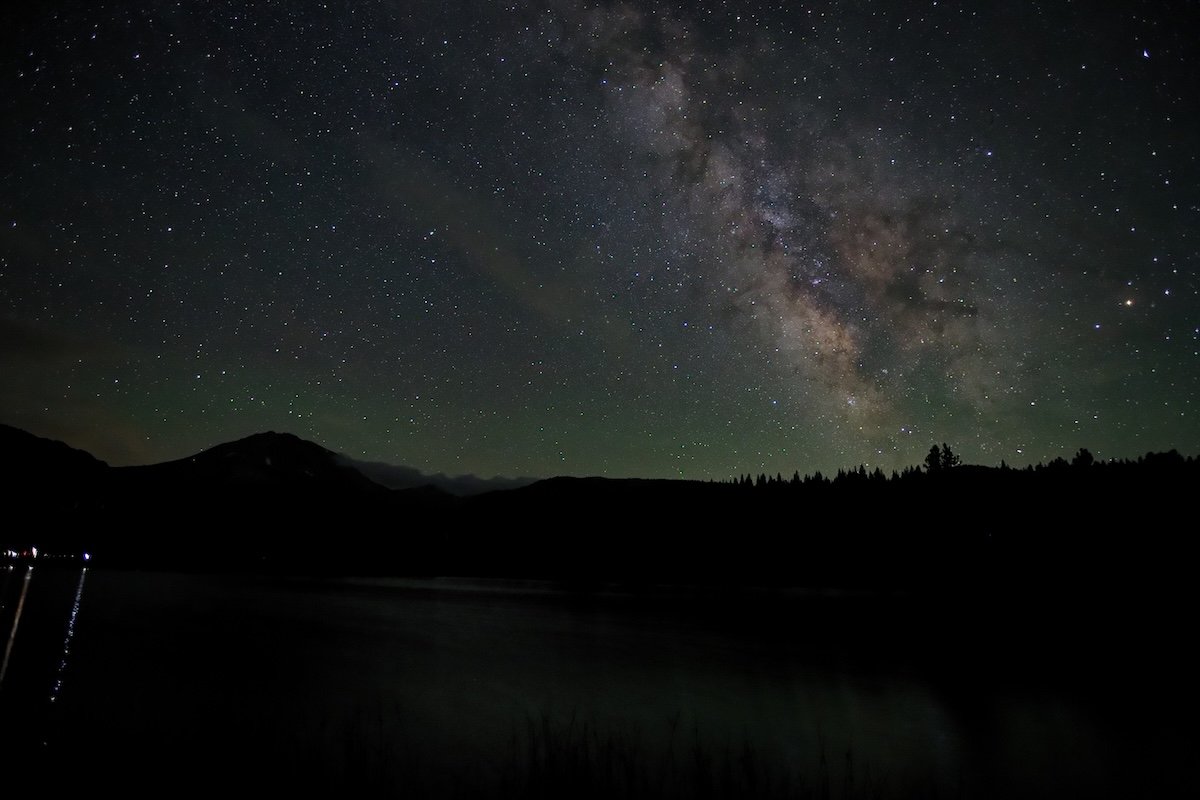
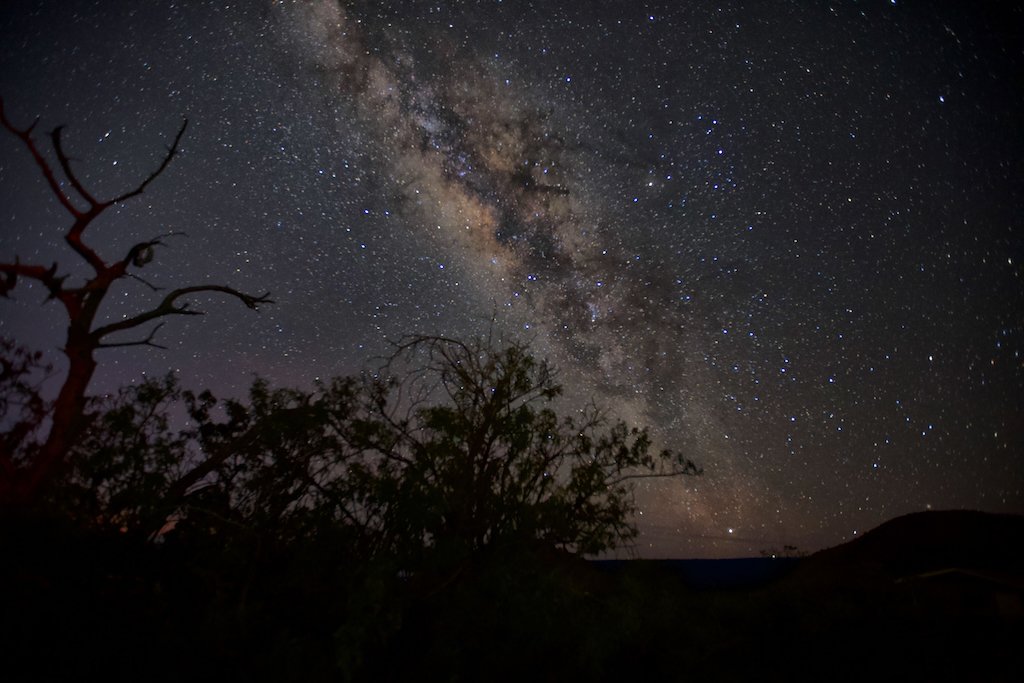
Your first step is figuring out where you’re going to observe. For naked eye astronomy, location matters more than almost anything else — ideally, you want to be under a Bortle 4 sky or darker. That’s genuinely dark, where the Milky Way is obvious and your eyes can reach their full potential.
That said, don’t let perfect be the enemy of good. Get to the darkest sky you can access and work with what you have. A Bortle 6 suburban sky still has plenty to offer, especially when you’re just starting out.
Read how to find dark skies here.

Step Two: Grab a Star Chart and a Red Flashlight
Before you head out, get your hands on a star chart or a planisphere.
A planisphere is a simple rotating dial that shows you exactly which stars and constellations are visible from your location on any night of the year — you just line up the date and time and it maps the sky for you.
A printed star chart does the same thing for a specific date. Either way, you’ve got a physical map of what’s above you, which makes the difference between staring blankly at the sky and actually knowing what you’re looking at.
A red flashlight is the other essential. You need to be able to read your chart in the dark without destroying your night vision — and a red light does exactly that. White light from a phone or a regular flashlight will wipe out your dark adaptation in an instant.
Apps can be useful for identifying things on the fly (especially planets), but reaching for your phone is a trade-off you’ll feel immediately. A chart and a red light keep you in the dark where you want to be.

Step Three: Wait 30 to 40 Minutes
A lot of people step outside under a dark sky, spend maybe 5 to 10 minutes looking at some stars, find the Big Dipper and think wow, beautiful — and then get back in the car, step back inside, or just get distracted by something else. But what they saw wasn’t the full picture. It was what their daylight eyes could scrape together in the dark, which is a fraction of what’s actually up there.
Your eyes need 30 to 40 minutes to fully dark adapt. Go as long as you can. The longer you stay out, the more the sky opens up — stars you couldn’t see before start appearing, faint structure emerges, and the Milky Way stops being a vague smudge and becomes something with real texture and depth. That transformation doesn’t happen in two minutes. Give your eyes the time they need, and the sky will pay you back for it.
Step Four: Get Comfortable
The first time I experienced a genuinely dark sky, I didn’t know what to do with myself. The Milky Way arched from horizon to horizon like a river of light and I found myself frozen in awe (and soon in a lot of neck pain).
So my advice when doing naked eye observation? Don’t just stand there. Recline.
Sit in a lounge chair. Float in a pool. Sink into a hot tub. Lay flat on the grass with a blanket under you. When you’re not fighting to hold your head up, you stop thinking about your neck and start actually seeing what’s above you. The whole sky becomes yours.
This is the zoom-out that our daily lives rarely give us, and it is good for your soul in a way that’s hard to put into words.
But you can’t get there if you are managing discomfort.
What Naked Eye Astronomy Actually Gets You
There’s a reason experienced astronomers still spend time observing without any equipment. Naked eye observation teaches you things that a telescope just can’t do nearly as well.
You learn your limiting magnitude
Magnitude is the scale astronomers use to measure brightness — the lower the number, the brighter the object. The full Moon is around magnitude -13. The brightest stars are around 1. It’s a counterintuitive scale but it clicks fast once you’re out there using it.
The faintest stars you can detect tells you a lot about your site, about the atmosphere, and about how well your eyes are adapted. Under typical dark skies most people land around that magnitude 6 threshold.
However, some people do have what feels like superhuman vision and under exceptional conditions, the human eye can push all the way to magnitude 8. Even if you don’t have the best naked eye vision, learning where your eyes fall on this scale is a real skill, and it develops the more time you spend under dark skies.
You learn the night sky
You can’t star hop, navigate by stars, or find anything with a telescope if you don’t know the sky first. Naked eye time is how you build that map in your head. The constellations become familiar. The seasonal patterns click into place. This is the foundation everything else is built on.
It’s also just a really cool feeling to be able to look out to the night sky and start to find your way around the stars. You feel like some kind of Polynesian explorer who’s well connected to the sky.
You take in the beauty
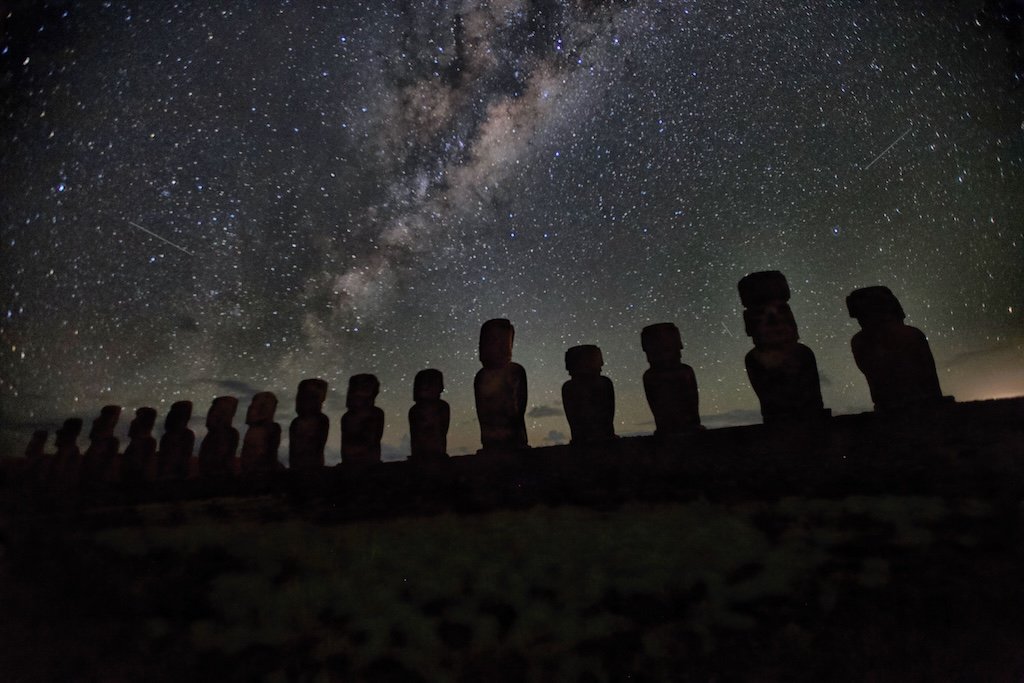
This sounds obvious, but it’s easy to get so focused on equipment and targets that you forget to just look. The Milky Way, a field of stars over a dark horizon, a meteor streak — these things are genuinely, deeply beautiful. While seeing Saturn up close or a galaxy inspire awe and wonder, star bathing under a really dark sky is something that hits different. It’s not wonder at a thing, it’s wonder at existence itself.

Some Things Are Best Seen With Your Eyes Alone
Just like certain deep-sky objects reward a telescope and nothing else, there are celestial events that are actually worse with optical aid. The naked eye is the right tool for these:
Meteor showers
A telescope or binoculars give you a tiny window of sky. A meteor could streak anywhere across the entire dome above you. You want your whole field of view — both eyes wide open, relaxed, taking in as much sky as possible.
This puts meteor showers in a distinctly naked eye category, and if you’ve been putting time into naked eye astronomy — dark adapting, learning the sky, training your eyes, knowing how to get comfortable — you’re going to enjoy them on a completely different level than someone who just wandered outside for the first time.

Aurora
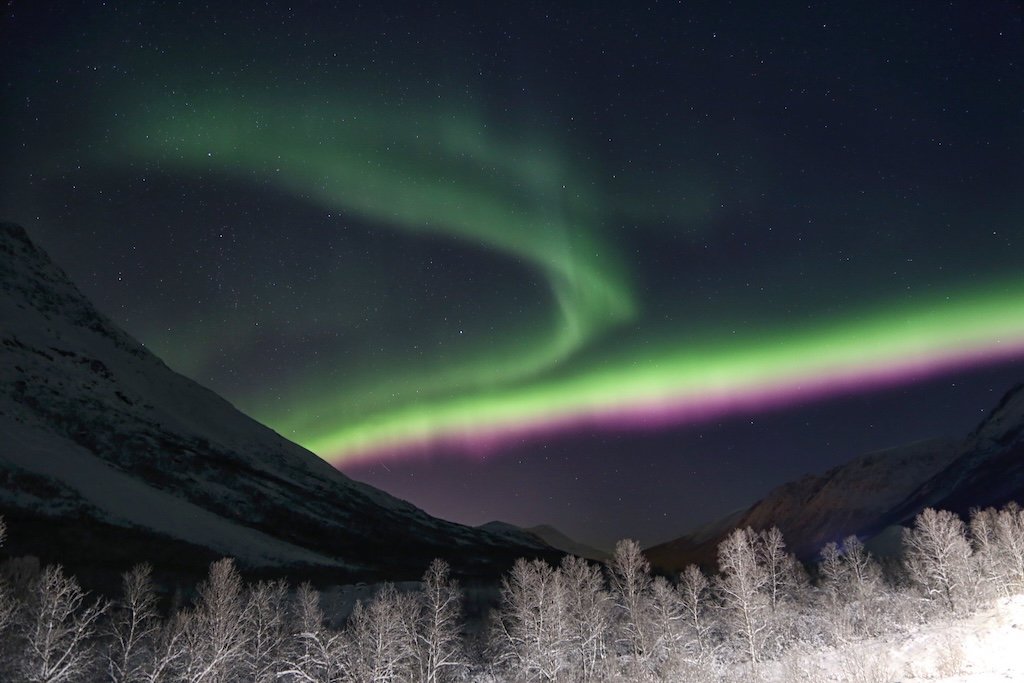
The most dazzling and other worldly experience I’ve ever had is watching the northern lights dance across the night sky. The movements, the pulses, and all of the color shifts are all best appreciated by the naked eye. While cameras can pull out colors and help you document these magical moments. It’s the naked eye that takes it all in.
Zodiacal Light
This is one of the most underappreciated sights in astronomy. It’s a pyramid of faint light stretching up from the horizon along the ecliptic, caused by sunlight reflecting off interplanetary dust. You need to see its full extent to appreciate it, which means wide open eyes in genuinely dark skies.
Gegenschein
The faint, oval glow on the ecliptic directly opposite the Sun. Subtle, beautiful, and very few people know it exists. Naked eyes are best suited.
Full Moon
Counterintuitive for astronomers (the full Moon destroys dark adaptation), but the full Moon hanging in a clear sky is one of the most visually stunning things nature produces. It’s actually very bright and kind of hard to admire in a telescope or binoculars without appropriate filters.
But the real way to experience the full moon is to take it in as it lights up a wide-open, natural landscape. There’s nothing that is more magical than looking out over the Grand Canyon when it is lit by a full moon; it’s a completely naked eye experience.

Push Your Eyes to Their Limit
Here’s where it gets genuinely exciting. With dark-adapted eyes, exceptional conditions, and some practice, your naked eye can reach farther than you might expect.
Mizar and Alcor in the Big Dipper
The star at the bend of the handle — is actually two stars separated by just 11 arcminutes. Splitting them with the naked eye was historically used as a vision test among Arabian astronomers. Can you do it? Try.
Jupiter’s Galilean moons
The same ones Galileo spotted with his first telescope are technically within reach of sharp eyes under great conditions. They’re close to Jupiter and might require you to block out the planet’s glare, but people have done it.
Uranus
Uranus reaches magnitude 5.7 at opposition, which puts it right at the edge of naked eye visibility in dark skies. It won’t look like much — just a faint “star” — but knowing you’re seeing a planet 1.8 billion miles away with your own unaided eye is something else entirely.
Vesta
The asteroid Vesta can also reach naked eye brightness at favorable oppositions. Comets with the naked eye are one thing but seeing an asteroid with your own eyes is pretty incredible.

Get Started in Astronomy
You don’t need gear. You don’t need money. You need a clear night, a dark spot, and the willingness to wait 30 minutes.
Set a timer if you have to. No phones after you walk outside — any white light will undo your adaptation in seconds. Red lights only, and even then, sparingly.
Then just wait. Watch the sky reveal itself. Let your eyes do what they were designed to do in the dark.
If this has you fired up to get out under a dark sky, the next step is making sure you have the right telescope to bring with you. Not sure where to start? I put together a free PDF telescope cheat sheet that breaks down exactly which scope might be right for you, the specs that actually matter, and how to figure out your budget. Grab it — it’ll save you a lot of second-guessing before your first real dark sky night.

Leave a Reply