Bryce Canyon National Park: Dark Sky Dispatch

This post contains affiliate links. As an Amazon Associate I earn from qualifying purchases. If you click a link and make a purchase, I may receive a small commission at no extra cost to you.

Bryce Canyon National Park is one of those places that earns its reputation in the daytime and then somehow exceeds it at night. Sitting at over 8,000 feet in southern Utah, it’s home to one of the most accessible and rewarding dark sky experiences in the country — the kind of place where you can park your car, walk a short trail, and find yourself standing under a sky full of more stars than most people have ever seen. This is what it’s like after the sun goes down.

Overview

  • Location: Bryce Canyon, Utah
  • Bortle Class: Class 2
  • Designation: International Dark Sky Park (DarkSky International)
  • Best Season: Late spring through fall; summer offers the warmest nights and access to ranger programs, though wildfire smoke can be a factor — check air quality before visiting

On the Ground

Bryce Canyon is one of the more accessible dark sky parks in the country. The main scenic drive, Bryce Canyon Road, runs along the rim with numerous pullouts and parking areas at major viewpoints. Sunset Point and Inspiration Point are among the most popular, both offering direct views into the canyon amphitheater and access to the Rim Trail. Restroom facilities are available at Sunset Point. Lodging is available within the park at The Lodge at Bryce Canyon, positioned near trailheads with direct canyon access.

What You’ll See

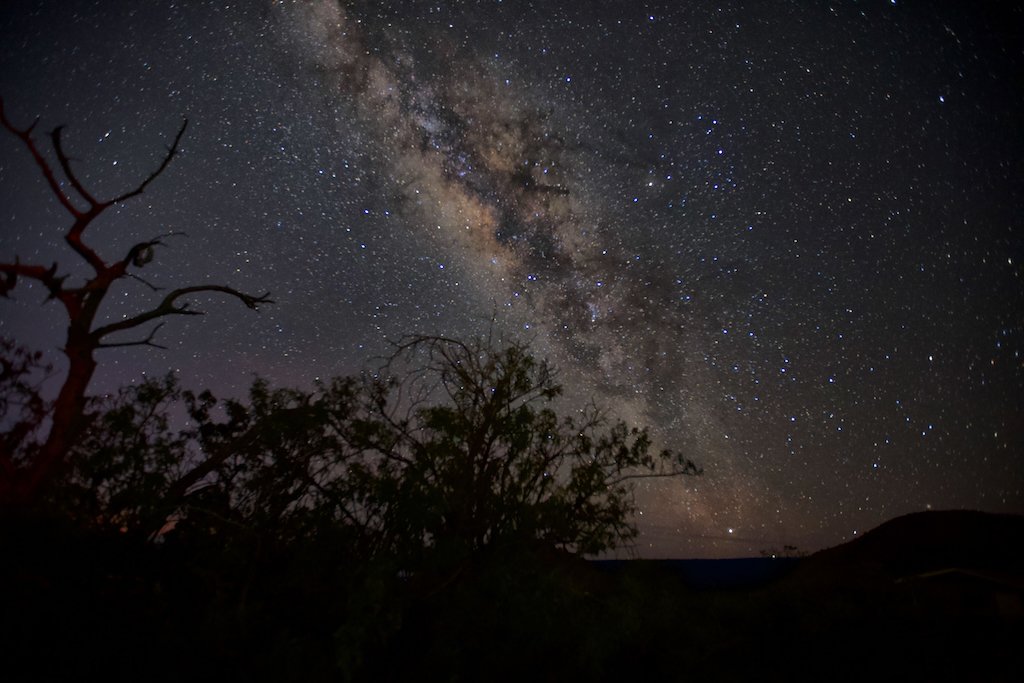
At 8,000–9,000 feet elevation, the thinner atmosphere reduces haze and atmospheric distortion, producing some of the clearest views of the night sky in the American Southwest. Under moonless conditions, up to 7,500 stars are visible to the naked eye. The Milky Way is a prominent naked-eye feature during the summer months, visible directly over the canyon from the rim viewpoints. The canyon’s hoodoos — the orange-and-white spire formations the park is known for — provide a distinctive foreground for astrophotography.

The park runs several structured astronomy programs. Bryce Canyon hosts a popular annual star party — the Astronomy Festival — each June, spanning several days and including evening programs, constellation tours, and telescope viewing. Ranger-led telescope programs also run through June and July at the visitor center, typically beginning around 9:45 PM and requiring no reservation, though they can draw large crowds.

Full moon hikes are offered seasonally and do require tickets in advance.

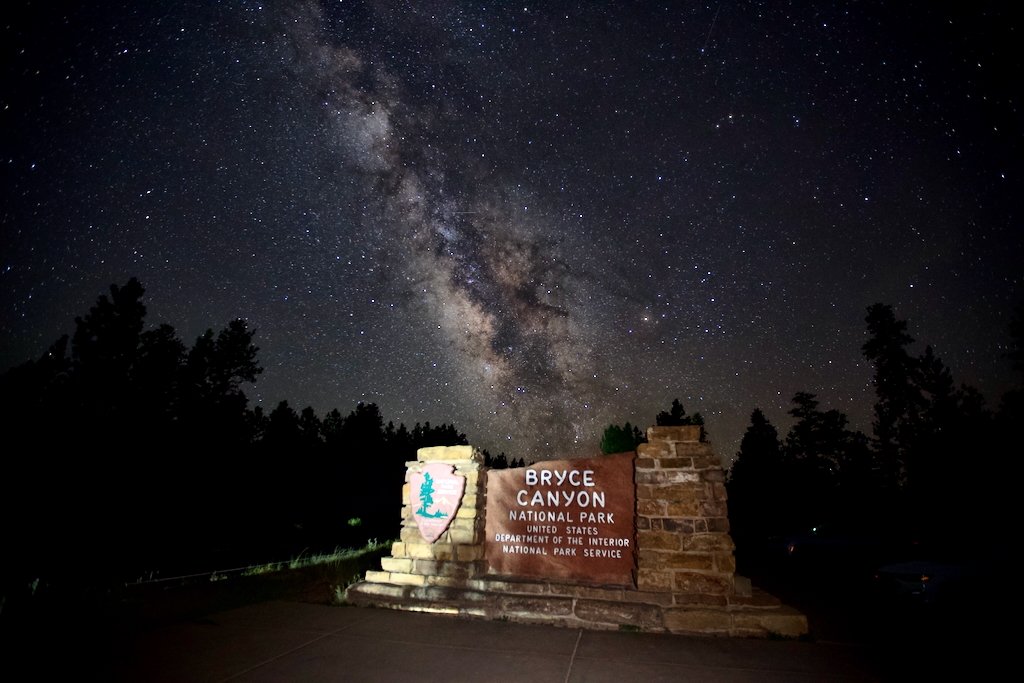
The Milky Way at Bryce Canyon national Park

Field Notes

We headed out after dark and made our way to Sunset Point, then walked the Rim Trail looking for a good spot. There was traffic out there — people coming and going, some a little loud — but the rim is long enough that if you’re willing to walk, you can find your own quiet bench and some space. That’s exactly what we did.

We ended up with about 30 minutes of true dark sky before the moon came up, which was shorter than I would have liked, but what we got was spectacular. The Milky Way was just popping overhead — vivid in a way that’s hard to describe if you haven’t seen it from a place like this. And having the canyon below you while that’s happening above you is something else entirely.

The smoke situation is worth flagging — the fires in the area had been bad enough leading up to our visit that we genuinely considered canceling the trip. Clear skies weren’t something we could count on at all. But air currents can shift quickly, and for whatever reason, the night we went out the visibility was exceptional. That’s something to keep in mind if smoke is looking bad when you’re planning your visit — it can go either way fast, and it might be worth waiting it out rather than writing the trip off entirely.

The Milky Way at Bryce Canyon national Park

I didn’t make it to the ranger telescope program, and I genuinely wish I had. By the time we got there it was packed, and after a full day of hiking I made the call to just sit with the sky and shoot rather than stand in a crowd — but watching from a distance it looked like a fantastic program and it’s the first thing I’d do on a return visit.

The full moon hikes are also something worth planning around if the timing works. I’ve hiked the Grand Canyon under a full moon before, and experiencing a canyon like this under full moonlight is its own kind of stunning — completely different from the dark sky experience, but just as worth it in its own way. You will not believe how illuminated the walls of a canyon can be under a full moon. It’s like a completely different world — the hoodoos lit up in that pale light, the whole amphitheater visible in a way that almost doesn’t feel real. It has to be seen to be understood.

Overall Bryce Canyon sits at the top of my list. The daytime experience alone would make it worth the trip, and the fact that you can walk from your car to a world-class dark sky view in minutes makes it one of the most accessible and rewarding stargazing destinations I’ve been to.

Get started in astronomy

If nights like this have you curious about getting into astronomy, I put together a free telescope cheat sheet that covers everything you need to know to get started — what to look for, what to avoid, and how to make sense of it all before you spend a dime. It’s the resource I wish I had when I was starting out. Grab it for free at this link.


Comments

Leave a Reply

Your email address will not be published. Required fields are marked *